A Dog Parenting Companion for Busy Owners
A dog-parenting companion app that helps busy modern owners walk, log, and bond with their dogs every day.
The dog-parenting companion app is a personal experience-design project I made as my final assignment for an Experience Design course (June 2021).
Korea's pet-family ("Pet-Fam") population is exploding, but most existing dog apps are either glorified pedometers or shopping malls. They don't actually reduce the parenting load on busy working owners — and walks, the single biggest happiness driver for a dog, keep getting pushed to last place.
I ran a survey, 1:1 interviews, and a desk research pass to redesign the daily walking + parenting experience around a real persona, then prototyped three signature interactions: push-driven walk planning, shake-to-toggle walk tracking, and push-prompted parenting journals.
This is a personal/student project — not a shipped product.
Walks are the #1 happiness driver for a dog — and the first thing busy owners cut.
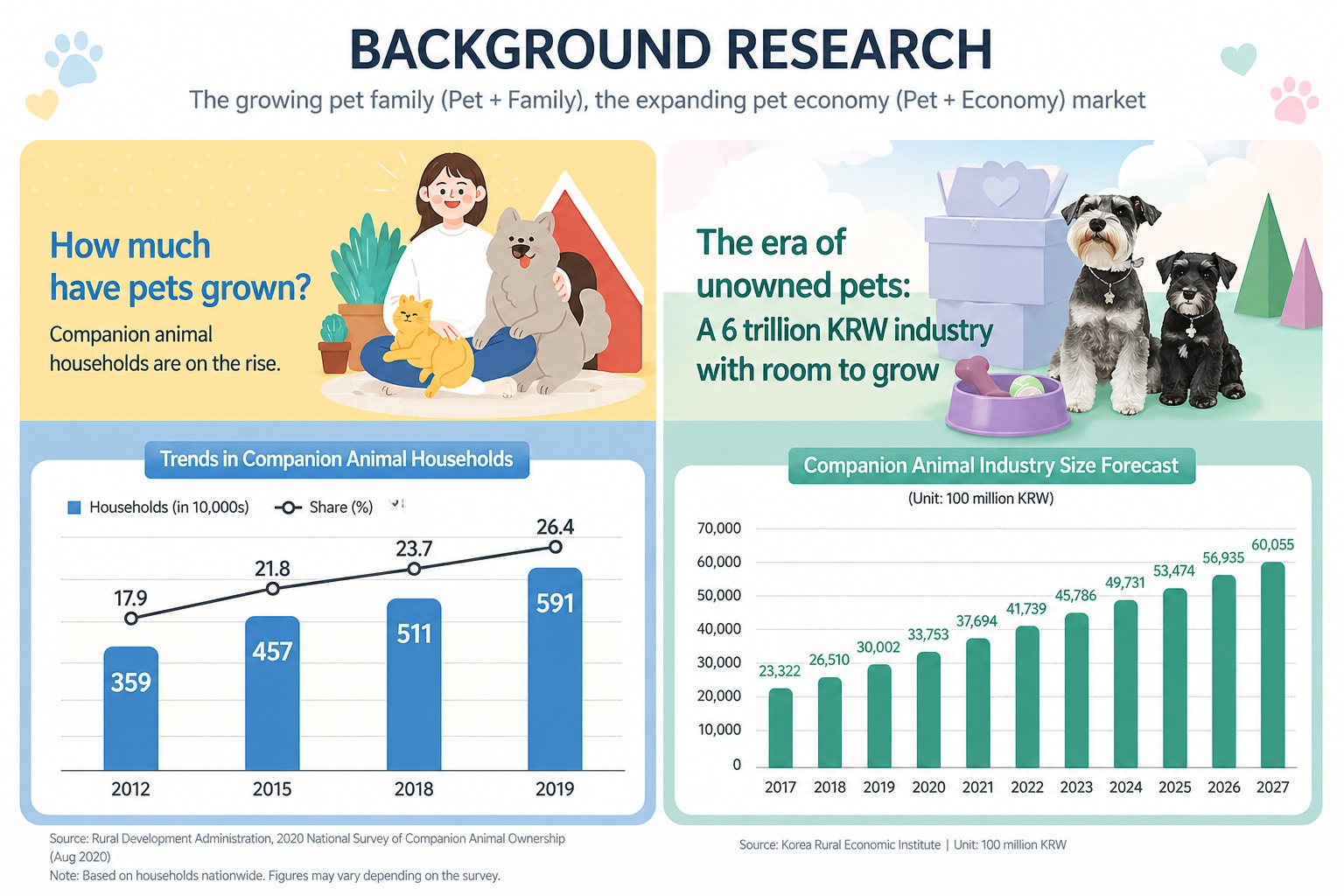
Background — Korea's pet-family households jumped from 3.59M (2012) to 5.91M (2019), and the pet industry is on track to pass ₩6 trillion by 2027. But the apps haven't kept up.
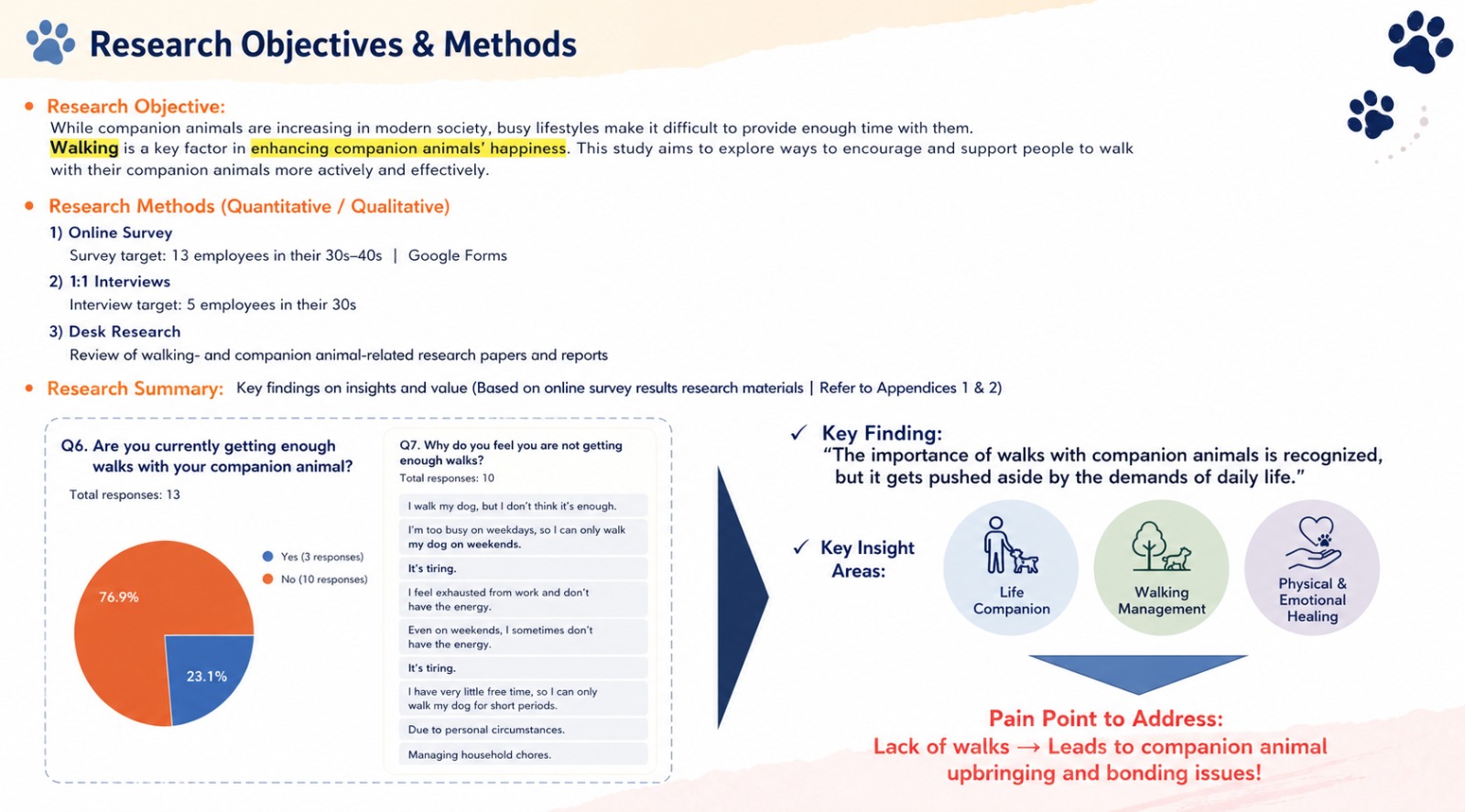
Problem framing — From 13 survey respondents and 5 interviews with working dog owners in their 30s–40s: · 23% admitted they were NOT walking their dog enough · The reasons were almost identical: "too busy," "too tired after work," "only weekends." · Existing dog-walk apps (Petpi, Wiggles) only log routes/time, hand out shopping points, or surface community feeds.
Desk research insight — Owners and dogs experience the same walk completely differently. Owners optimize for time and distance; dogs experience smell, social contact, and stimulation. Without help, owners can't read their dog's emotional state during a walk.
Pain point — Dog-parenting has become a real caregiving burden, and walks — the most important happiness lever — are the first thing to fall off a busy schedule.
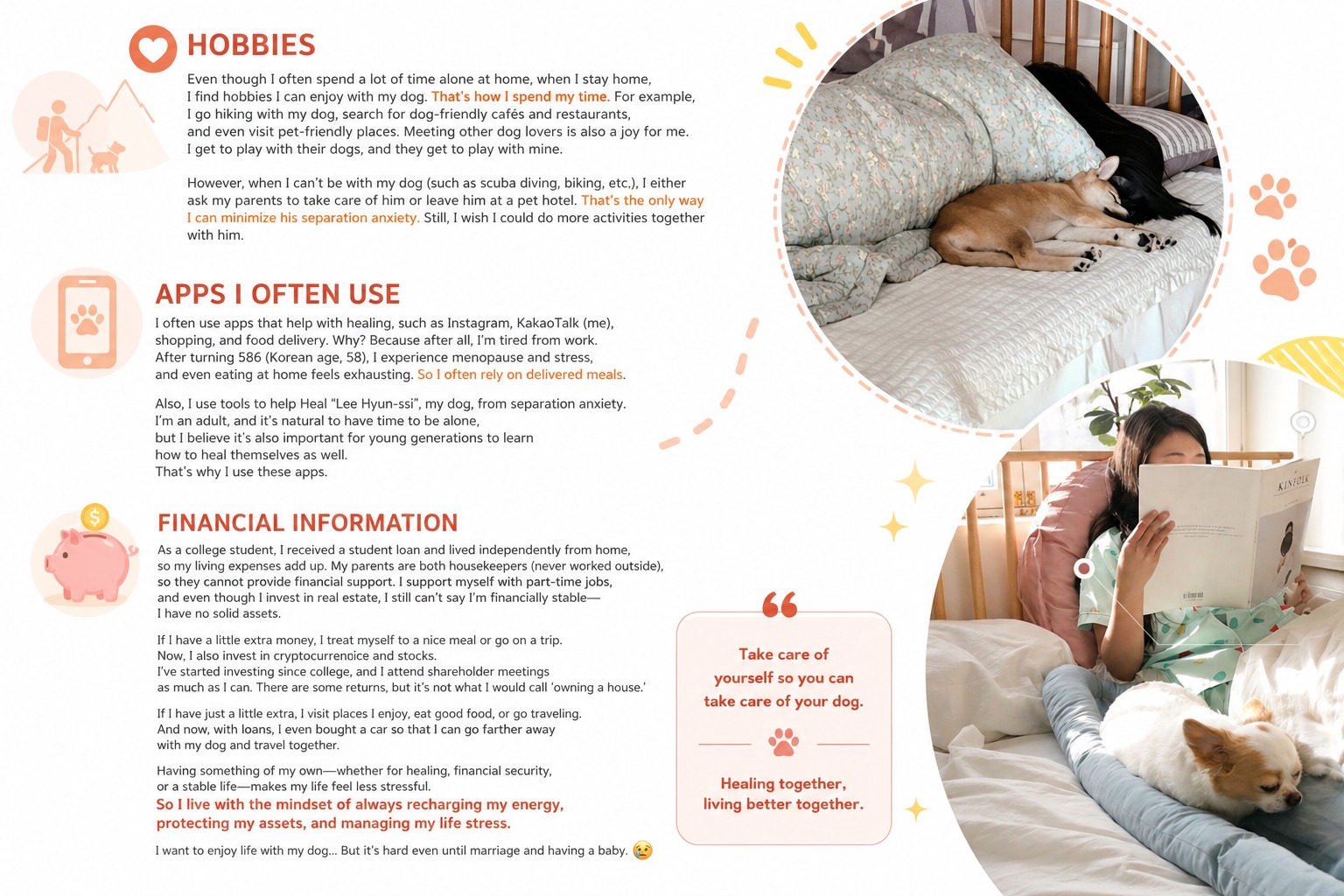
Lee-hyun Kim, 32 — Pet-Fam, full-time worker, guilty dog parent.
Persona — Lee-hyun Kim, 32, Pet-Fam.
A full-time office worker living with one small-breed dog in a Seoul apartment. Loves her dog like family, feels guilty about short walks, ends weekdays exhausted, and uses weekends to overcompensate.
Goals · Give her dog a healthy, stimulating daily walk even on workdays · Stop feeling guilty about being a "bad dog parent" · Track her dog's growth and mood like a real parenting journal · Connect with nearby dog owners for social walks
Frustrations · Existing apps feel like fitness trackers, not parenting tools · No clear way to know if today's walk was "enough" · Hard to take a phone out mid-walk to log anything · Wants the app to nudge her, not the other way around
Push to plan. Shake to track. Prompt to journal. The phone stays in the pocket.
Three signature scenarios — each one solving a specific moment in the daily parenting loop.
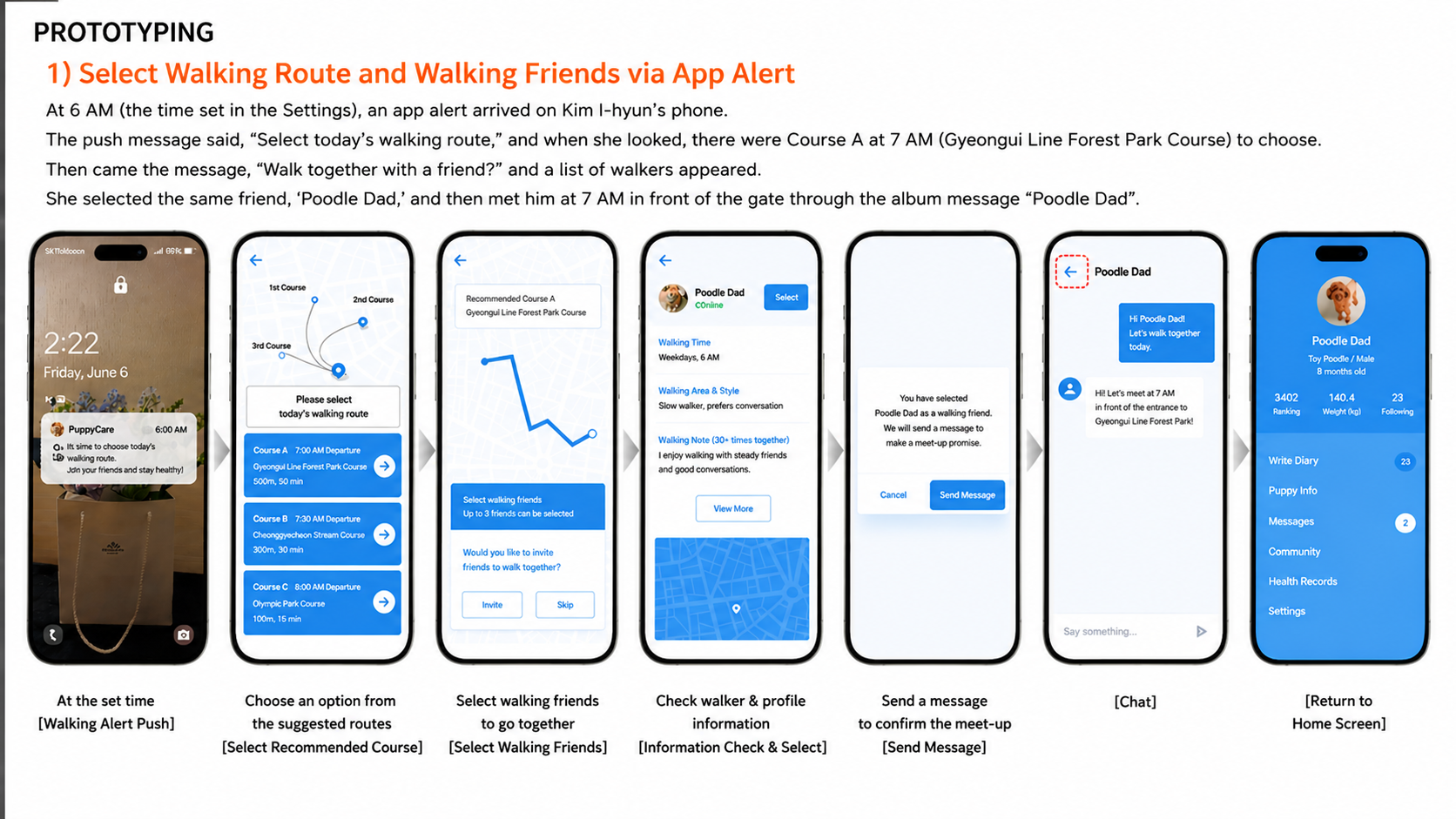
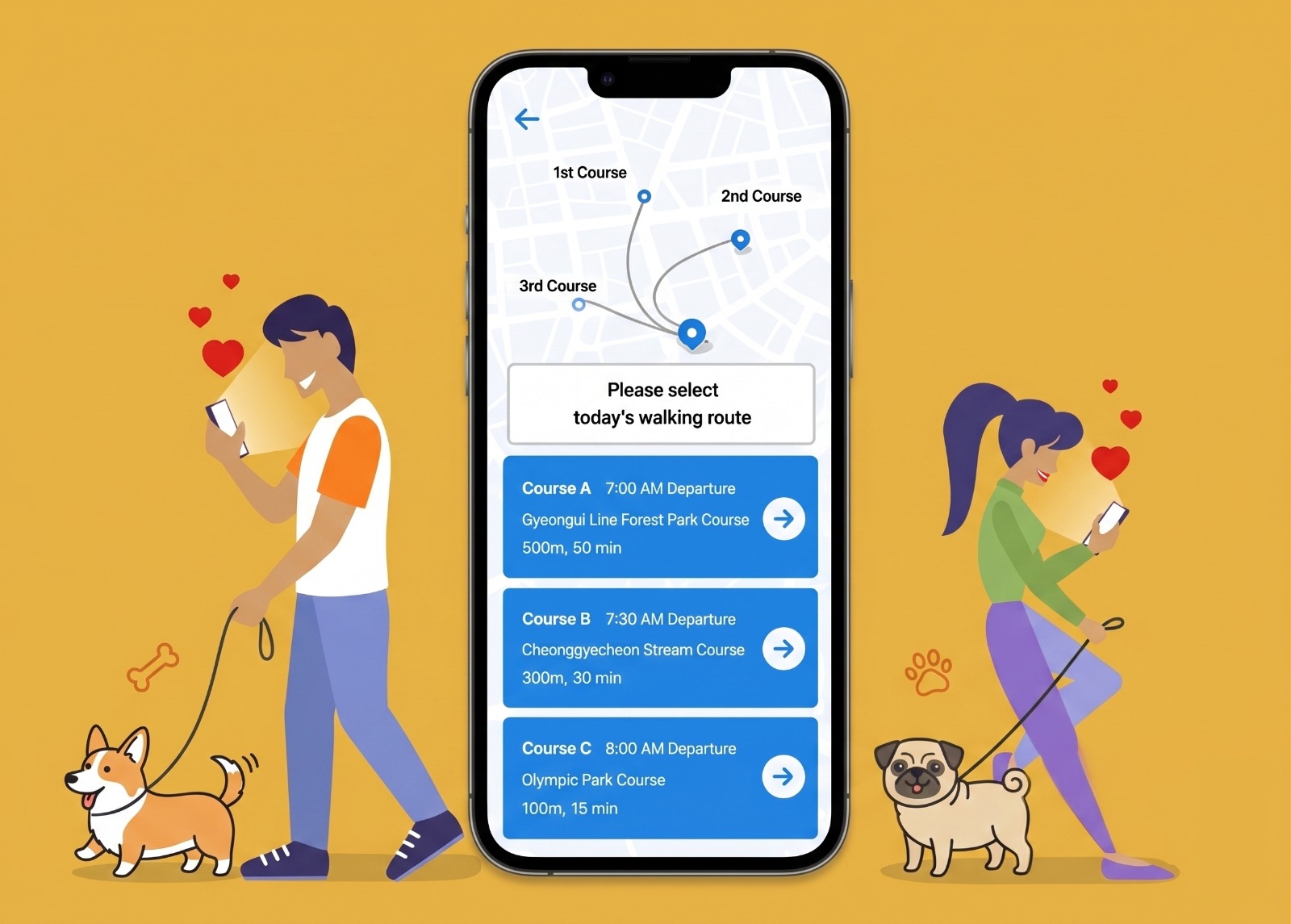
1 · Push-driven walk planning — In the morning, the app sends a push with today's recommended walk route and suggested walking buddies (other registered dogs nearby). Tap to confirm route, tap to invite a friend, tap to chat. The friction of "deciding when and where to walk" is removed before the owner even leaves the house.
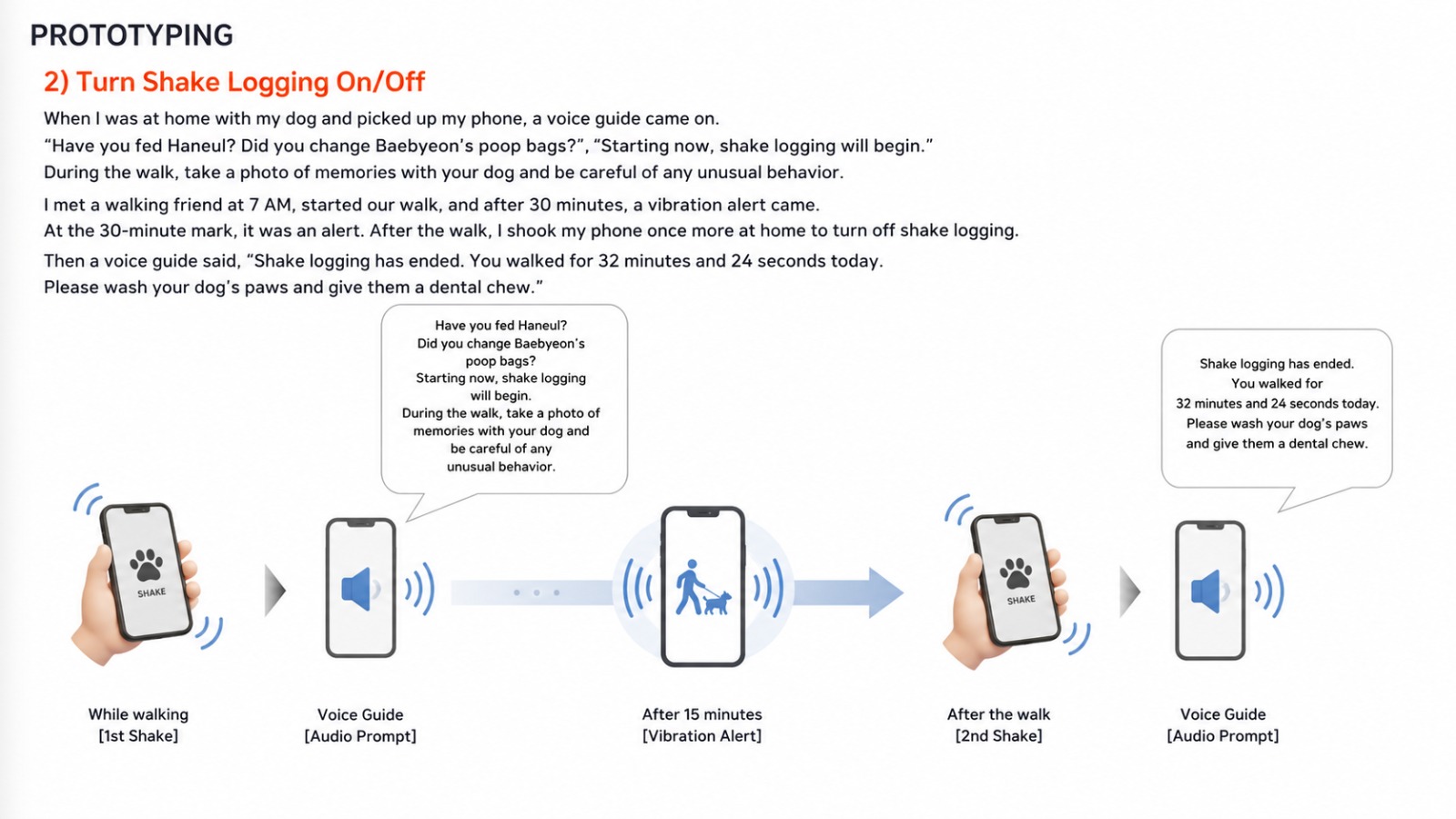
2 · Shake-to-toggle walk tracking — Once outside, the owner doesn't have to fish out the phone, unlock it, and find the start button. A single phone shake starts tracking; a second shake stops it. Voice prompts confirm start, mid-walk progress (haptic buzz at 15 minutes), and end. Both hands stay on the leash.
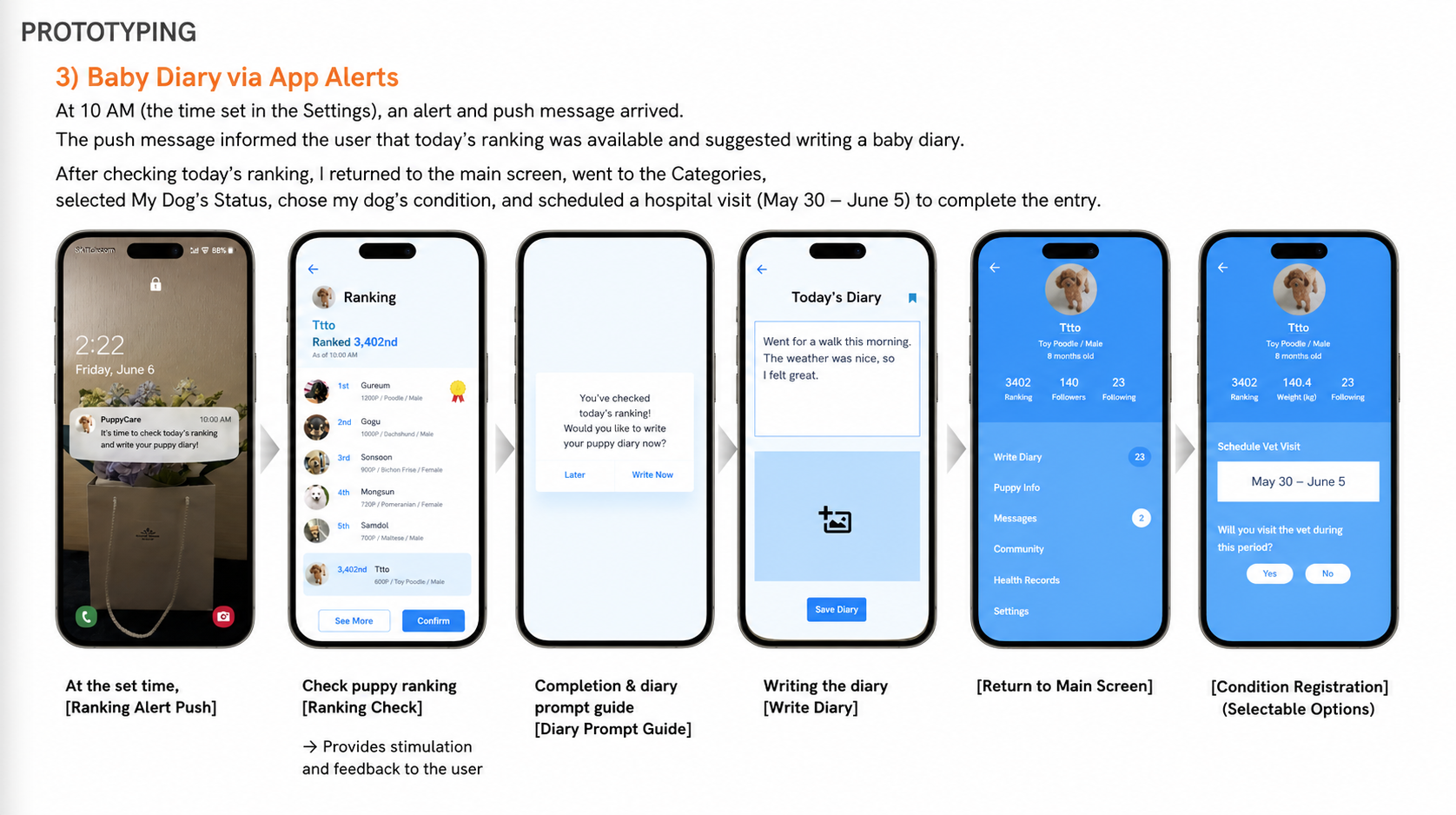
3 · Push-prompted parenting journal — After the walk, the app prompts a short parenting log: photo, mood, notes, food, training. Over time this becomes a real growth diary, not a route history.
Design principle — The app should feel like a co-parent that nudges, not another to-do app the owner has to remember to open.
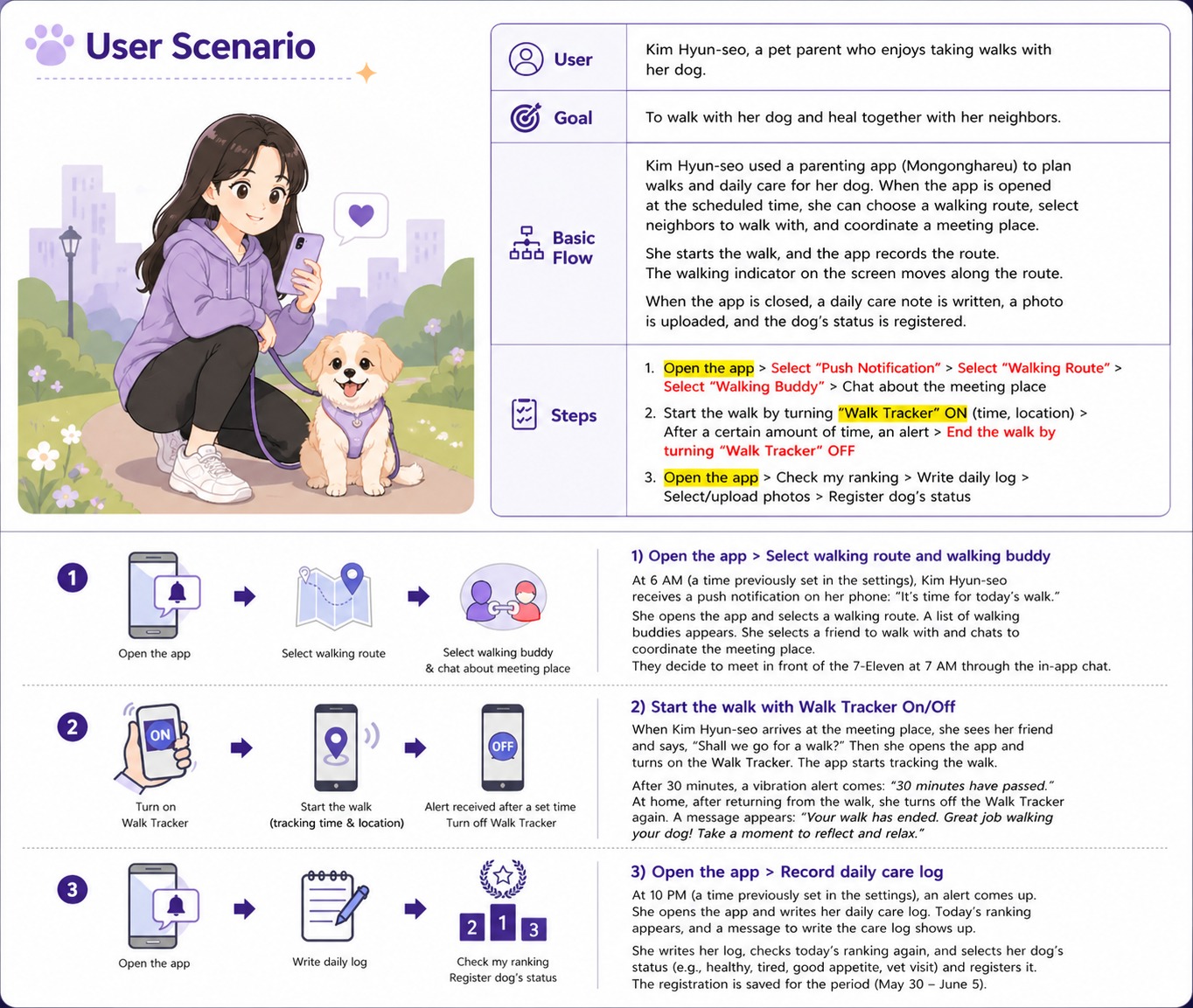
Use Cases & Journey Map
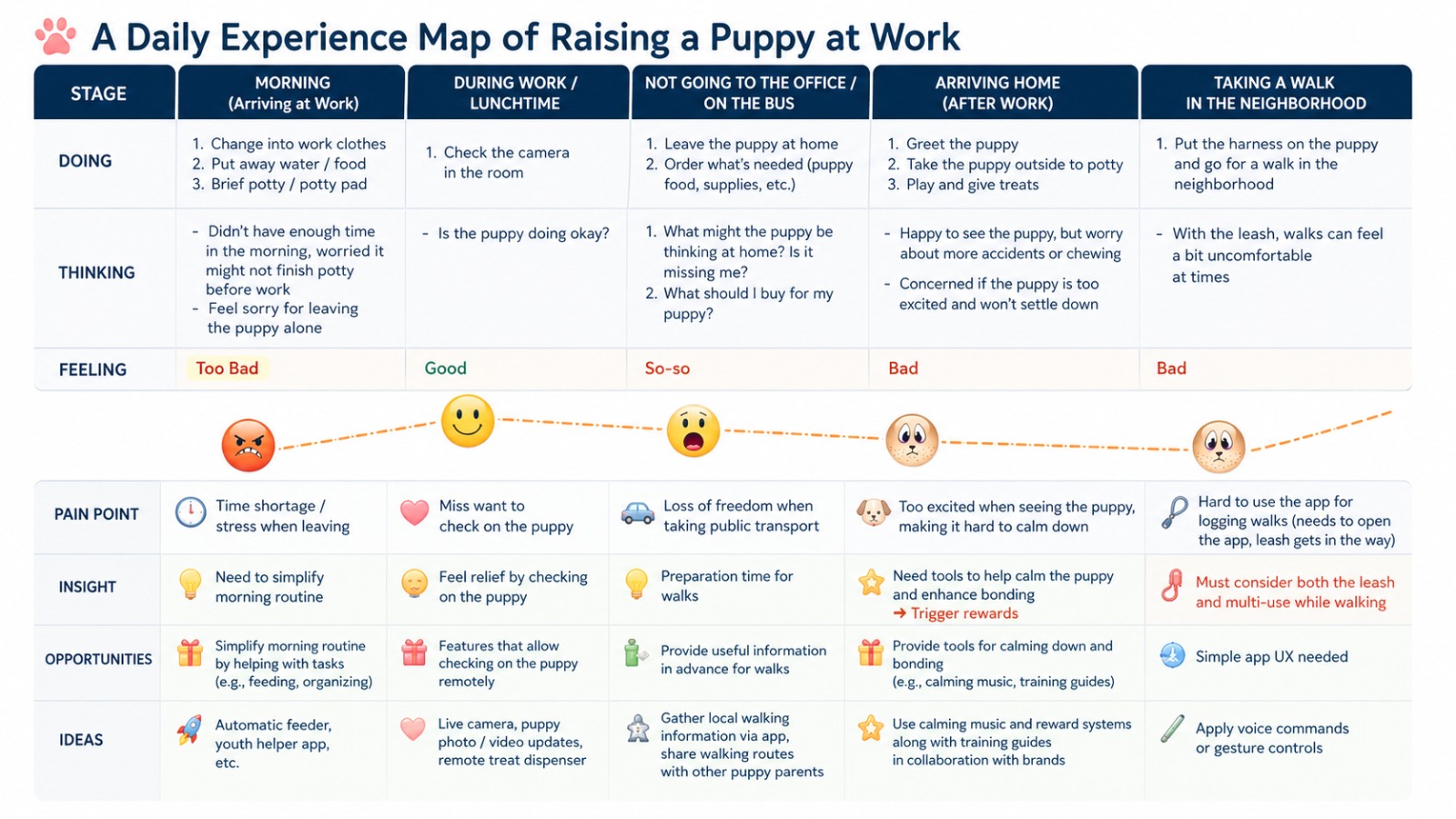
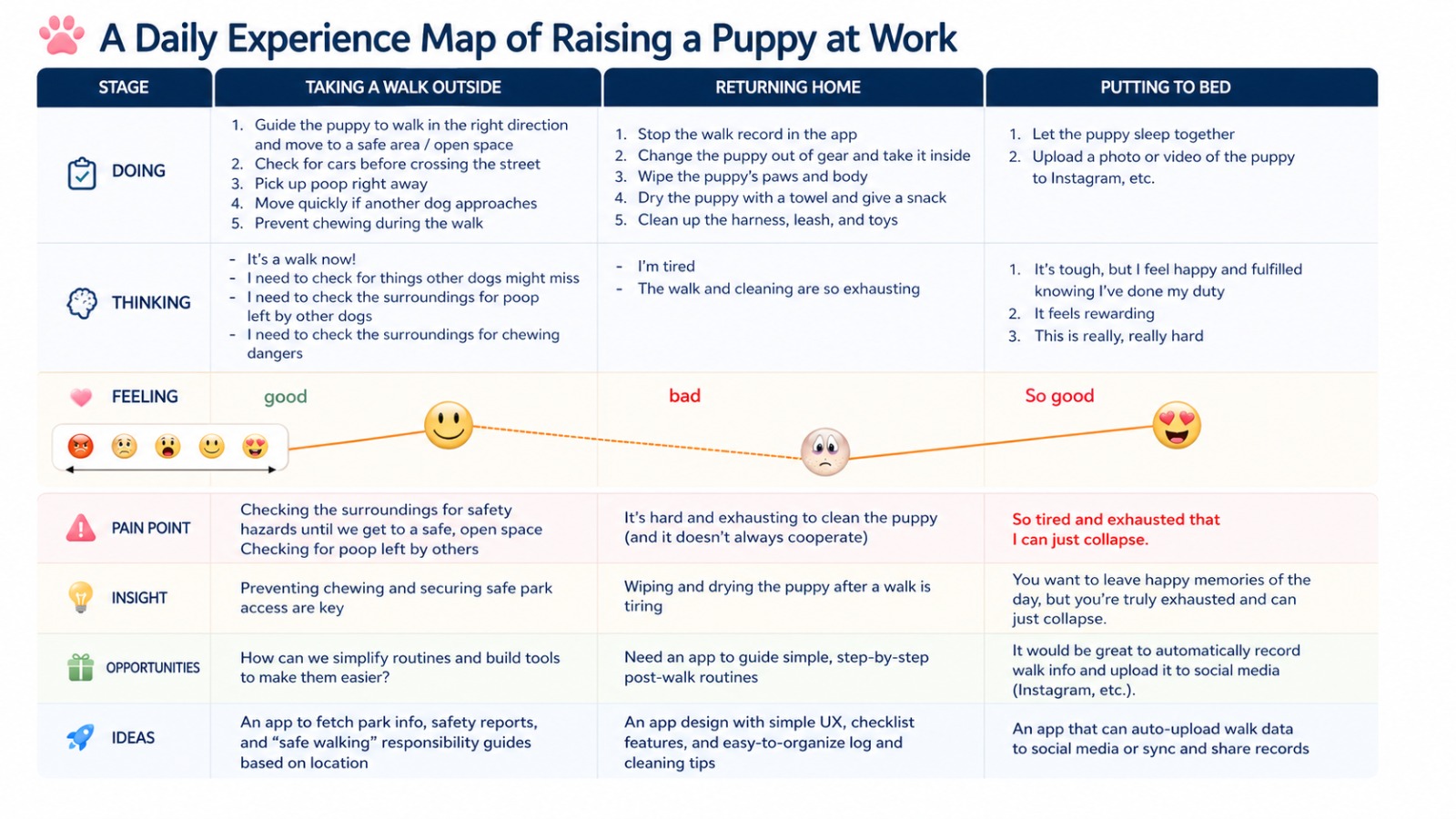
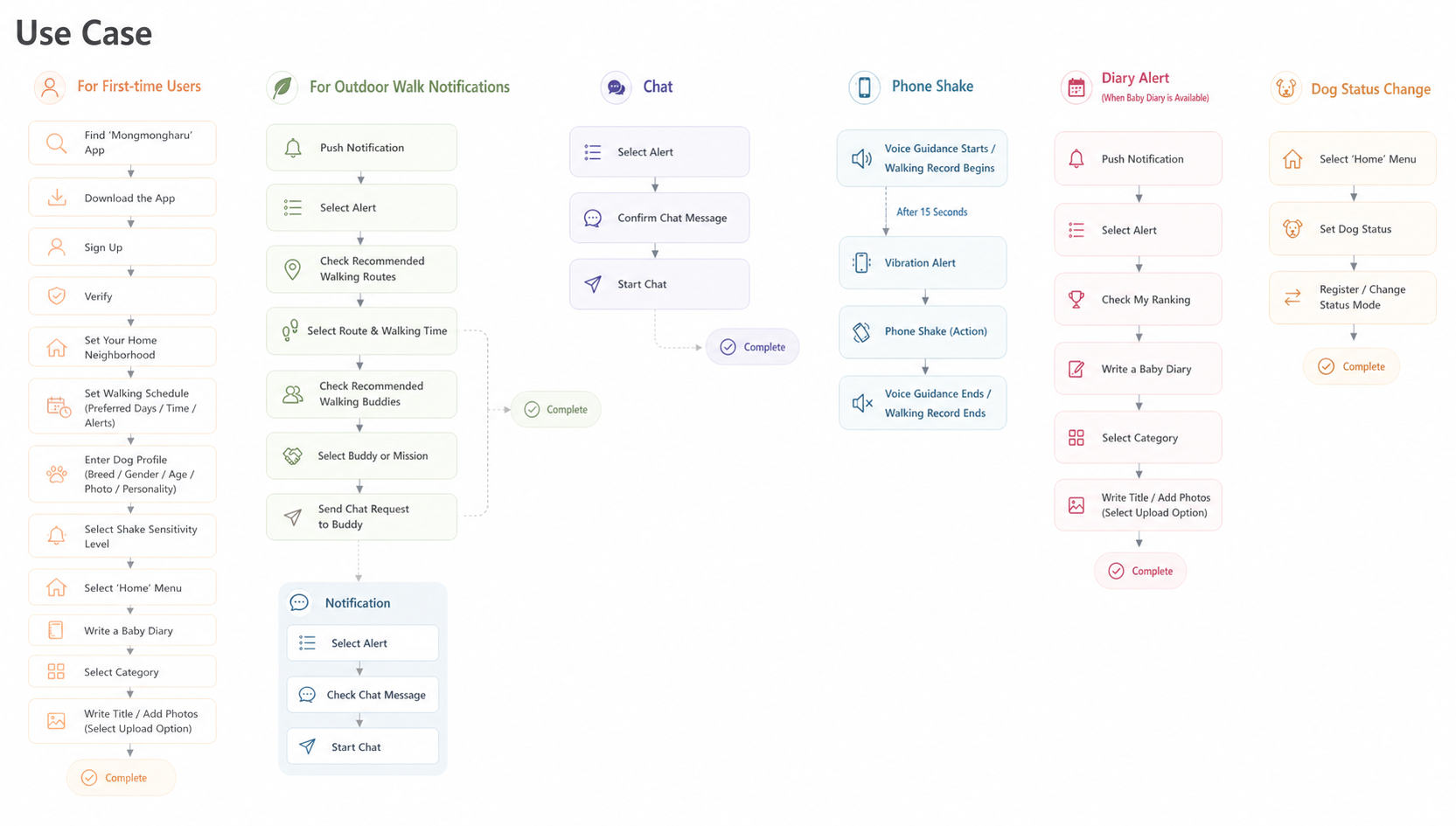
Journey map and use case flows from the original 2021 final assignment deck.
A research-driven concept for a co-parent app, not another pedometer.
Outcome — A complete experience-design package: research synthesis, persona, journey map, user scenarios, use cases, and three prototyped signature interactions.
What I prototyped · Scenario 1 — Push-notification walk planner with route + buddy selection + chat handoff · Scenario 2 — Shake-to-start / shake-to-stop walk tracking with voice + haptic feedback · Scenario 3 — Push-prompted parenting diary capturing photo, mood, training, and food
Reflection — As a student project, the dog-parenting companion app project taught me to anchor every interaction in a real daily moment of friction ("phone is in my pocket, leash is in my hand"), and to treat ambient nudges (push, shake, voice) as first-class UI on par with buttons and screens. The framing — pets as a parenting relationship, not a fitness tracker — is something I still carry into my professional product work.